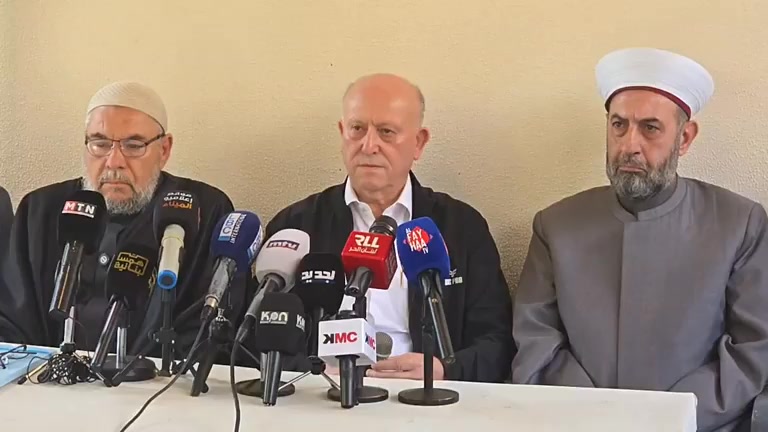
Proceedings of the Expanded Scholarly and Legal Conference
"Comprehensive General Amnesty in Lebanon: A Unifying National Demand"
Organized by the Dar al-Fatwa (Islamic Supervisory Authority) in Lebanon, in collaboration with a distinguished assembly of senior jurists, religious scholars, bar association leaders, and families of detainees
The Dar al-Fatwa in Lebanon convened a major conference to examine the latest legislative and judicial developments concerning the general amnesty law and to review the conditions of Islamist detainees held in Lebanese prisons. The proceedings took place in the main conference hall, drawing a sizable audience of scholars, legal experts, and members of the press.
Key Speakers at the Conference:
His Eminence Sheikh Dr. Adnan Amama
Delivered a foundational paper exploring the jurisprudential and humanitarian dimensions of amnesty, underscoring the moral imperative of ending the injustice of prolonged detention without definitive conviction.
His Eminence Sheikh Tarek Mazhar
Deconstructed the double standards that have come to define the state's handling of prisoners, calling for the establishment of a single, uniform standard of justice applicable to all Lebanese citizens.
His Eminence Sheikh Raed Halihal
Emphasized the vital role of scholars and mosques in mobilizing public conscience and urging officials to bring an end to this ongoing human toll.
Representatives of the Detainees' Families Committees
Shared vivid and deeply moving testimonies detailing the deteriorating health conditions inside detention facilities, the staggering cost of legal proceedings, and the long string of unfulfilled political promises stretching back years.
Final Statement Issued by the Conference:
Participants in the conference concluded by proclaiming the following human rights declaration:
- General Amnesty as a Sovereign and National Entitlement: Affirming that the enactment of a general amnesty constitutes the genuine gateway to comprehensive national reconciliation and the strengthening of domestic peace.
- Rejection of Exemptions for Opinion Cases and Fabricated Charges: Emphasizing that the amnesty must encompass all Islamist detainees and prisoners without discrimination or equivocation.
- Abolition of Contact Records and Submission Rosters: Calling on the Ministry of Interior and the security apparatus to fully comply with the previously issued Council of Ministers resolutions mandating the abolition of security contact records that restrict the movement of thousands of young people in the northern regions and the Bekaa Valley.
- Formation of a Supreme Follow-Up Committee: Tasking a joint committee comprising the Authority, the Dar al-Fatwa, and legal counsel with monitoring parliamentary sessions and engaging with the relevant political blocs.